
The ecommerce landscape has transformed dramatically, and choosing the right platform for your dropshipping business has never been more critical. While marketplaces like Amazon and eBay offer instant traffic, building your own store on a dedicated ecommerce platform gives you something far more valuable: complete control over your brand, customer relationships and long-term business growth.
With ecommerce platforms evolving rapidly and global online retail sales projected to exceed $7.4 trillion in 2025 (Statista, 2024), dropshippers face both unprecedented opportunities and tough competition. The platform you choose directly impacts your operational efficiency, shipping speeds, customer experience and ultimately, your profit margins. Unlike selling on third-party marketplaces where you’re just another seller among thousands, your own ecommerce platform positions you as a legitimate brand that customers can trust and return to.
This guide examines the seven best ecommerce platforms for dropshipping in 2026, helping you make an informed decision based on your business goals, technical skills and budget. Whether you’re launching your first store or scaling an established operation, understanding each platform’s strengths and limitations ensures you build on the right foundation.

Key Takeaways: Choosing the Right Ecommerce Platform for Dropshipping
- Ecommerce platforms give you full control over branding, customer data and business operations, unlike marketplaces, where you’re constrained by platform rules.
- Shopify leads the market as the most user-friendly option with extensive dropshipping app integrations and proven scalability.
- WooCommerce offers maximum flexibility and customization for WordPress users who want complete control without ongoing subscription fees.
- Platform selection should balance ease of use, integration capabilities, pricing structure and long-term scalability.
- The best platforms seamlessly integrate with fulfillment services to enable fast domestic shipping that meets modern customer expectations.
- Multi-channel selling capabilities allow you to expand beyond your main store to marketplaces while maintaining centralized inventory management.
- Initial costs vary widely, from free open-source solutions to premium platforms with monthly fees, but the total cost of ownership includes apps, themes and transaction fees.
What is an Ecommerce Platform?
An ecommerce platform is a software solution that enables businesses to create, manage and operate online stores. Unlike physical retail locations or third-party marketplaces, ecommerce platforms provide the complete infrastructure needed to sell products online under your own brand.
How Ecommerce Platforms Work
Modern ecommerce platforms function as comprehensive business management systems that handle multiple operational aspects:
Core Functions:
- Storefront Creation: Design and customize your online store with themes, layouts and branding elements
- Product Management: Upload products, organize categories, manage inventory and set pricing
- Shopping Cart & Checkout: Process customer orders with secure payment gateways and checkout flows
- Order Management: Track orders, manage fulfillment and communicate with customers
- Analytics & Reporting: Monitor sales performance, customer behavior and business metrics
- Marketing Tools: Built-in SEO features, email marketing and promotional capabilities
The platform connects various components of your business into a unified system. When a customer places an order, the platform processes the payment, sends order details to your fulfillment partner, updates inventory across all sales channels and triggers automated customer notifications.
For dropshipping specifically, ecommerce platforms integrate with suppliers and fulfillment services to automate the entire order flow. When customers purchase products, orders route automatically to your fulfillment partner, who handles inventory storage, quality control, packaging and shipping directly to your customers.
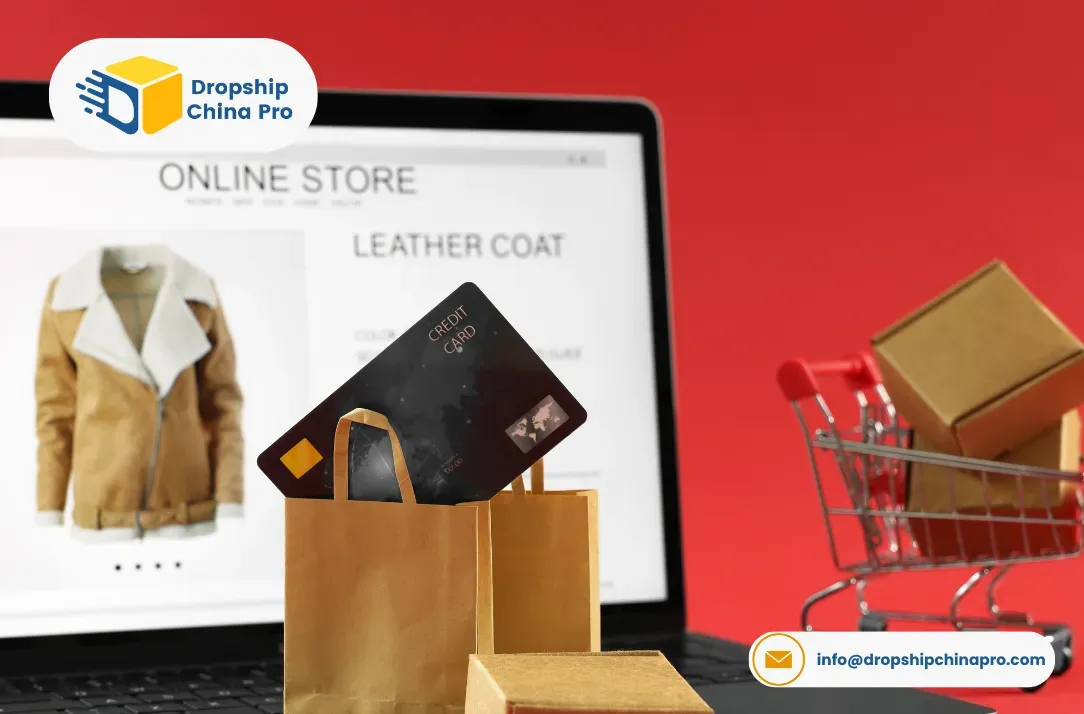
Ecommerce Platform vs. Marketplace: Understanding the Difference
Many new entrepreneurs confuse ecommerce platforms with online marketplaces, but these represent fundamentally different business models with distinct advantages and limitations.
Ecommerce Platforms
Key Characteristics:
- You own and control your website (yourstore.com)
- Complete branding freedom and customization
- Direct access to customer data and relationships
- You set all policies, pricing and business rules
- Lower per-sale costs but require marketing investment
- Build long-term brand equity and customer loyalty
Examples: Shopify, WooCommerce, BigCommerce, Wix, Squarespace
Online Marketplaces
Key Characteristics:
- You list products on someone else’s platform
- Limited branding and design control
- Marketplace owns customer relationships
- Must follow platform policies and fee structures
- Built-in traffic but intense competition
- Platform can change rules or suspend accounts
Examples: Amazon, eBay, Etsy, Walmart Marketplace, Facebook Marketplace
Why Platforms Work Better for Dropshipping
While marketplaces offer immediate traffic, building your dropshipping business on your own ecommerce platform creates sustainable competitive advantages. You’re not competing in a race to the bottom on price, fighting against thousands of sellers offering identical products. Instead, you build a recognizable brand that customers trust and return to directly.
According to discussions on Reddit’s r/dropship community, experienced dropshippers consistently emphasize that “Shopify is the top choice” for those building serious businesses, while marketplaces work better as supplementary sales channels rather than primary business foundations (Reddit, 2025). This aligns with industry data showing that businesses with their own branded stores achieve higher customer lifetime values and better profit margins compared to marketplace-only sellers.
Your own platform also provides critical data ownership. You can build email lists, retarget previous customers and develop relationships that drive repeat purchases. On marketplaces, the platform owns these relationships and can restrict your access at any time.
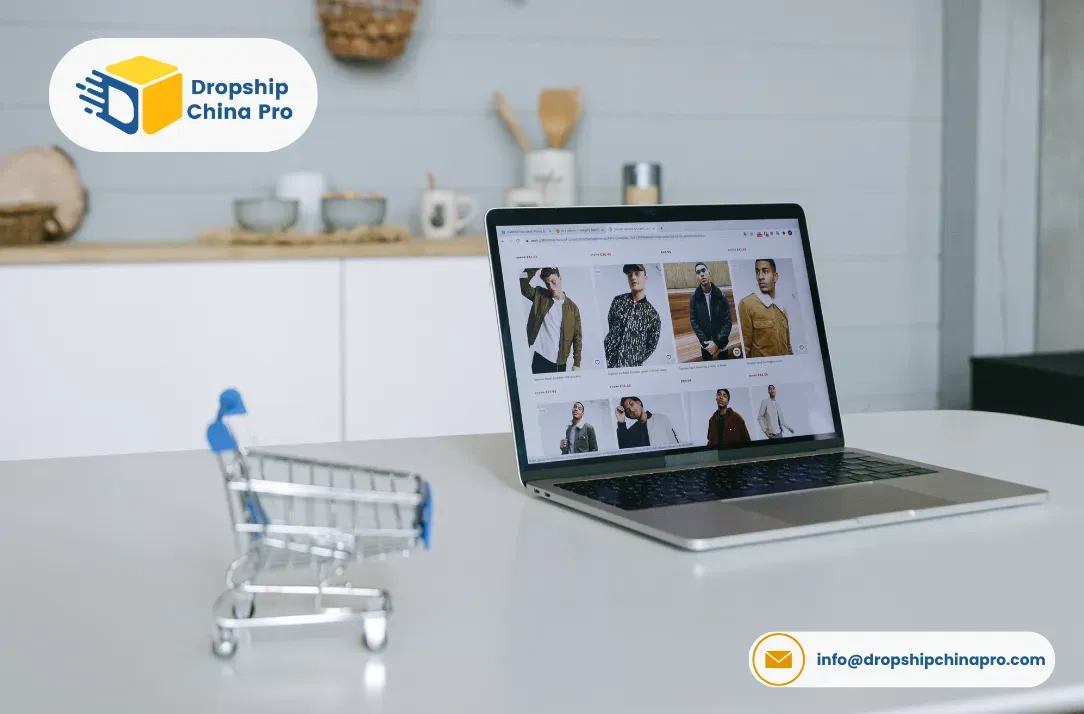
Why Choose an Ecommerce Platform for Dropshipping?
The advantages of building your dropshipping business on a dedicated ecommerce platform extend far beyond simple product listings. Here’s why successful dropshippers prioritize platform-based stores:
Business Control and Flexibility
- Set your own pricing strategies without marketplace fee restrictions
- Create unique customer experiences that differentiate your brand
- Implement custom policies for shipping, returns and customer service
- Test new products and marketing approaches without platform limitations
Customer Relationship Ownership
- Capture email addresses for remarketing and customer retention
- Build direct relationships that increase lifetime customer value
- Create loyalty programs and personalized shopping experiences
- Own your customer data for strategic business decisions
Brand Building and Credibility
- Establish a professional brand identity with custom domains
- Control every aspect of your store’s design and user experience
- Create content marketing strategies that drive organic traffic
- Build trust through professional presentation and reliable service
Cost Optimization
- Avoid high marketplace commission fees (typically 8-15% per sale)
- Control payment processing fees through competitive gateway selection
- Eliminate monthly subscription fees with some platforms
- Reduce long-term costs as your business scales
Integration and Automation
- Connect with fulfillment services for streamlined operations
- Integrate marketing tools for automated email campaigns
- Sync inventory across multiple sales channels
- Automate routine tasks to focus on growth strategies
Scalability Without Platform Restrictions
- Grow your business without hitting marketplace volume limits
- Expand to international markets at your own pace
- Add new product categories without approval processes
- Scale operations without increased percentage-based fees
The most successful dropshipping businesses use a hybrid approach: they build their primary brand on their own ecommerce platform while using marketplaces as additional sales channels. This strategy maximizes reach while maintaining brand control and customer relationships.
The 7 Best Ecommerce Platforms for Dropshipping in 2026
1. Shopify: The All-in-One Dropshipping Solution
Shopify dominates the ecommerce platform market with over 1 million active stores globally, and for good reason. The platform offers the perfect balance of user-friendliness, powerful features and extensive app integrations that make it ideal for dropshipping businesses of all sizes.
Key Features for Dropshippers:
- Intuitive drag-and-drop store builder requiring zero coding knowledge
- Massive app marketplace with dedicated dropshipping integrations (DSers, Spocket, Zendrop)
- Built-in payment processing through Shopify Payments (eliminates third-party fees)
- Abandoned cart recovery to recapture lost sales
- Multi-channel selling (Instagram, Facebook, TikTok, Amazon integration)
- 24/7 customer support with extensive documentation
- Mobile-responsive themes optimized for conversion
- Advanced inventory management with real-time synchronization
Integration with Fulfillment Services: Shopify seamlessly connects with professional fulfillment services through native integrations and APIs. The DSCP Smart Fulfillment Shopify app enables automated order routing, real-time inventory updates and streamlined fulfillment workflows that eliminate manual processing.
Best For: Beginners and growing businesses seeking a reliable, scalable solution with minimal technical complexity.
Pricing: Plans start at $39/month (Basic), $105/month (Shopify), and $399/month (Advanced), with a 3-day free trial available.
Why It Works: According to Reddit user discussions, “Shopify is user-friendly, highly scalable and has a vast app store for dropshipping-specific tools” (Reddit, 2025). The platform’s extensive ecosystem means you’ll find solutions for virtually any business challenge without custom development.
2. WooCommerce: Maximum Flexibility for WordPress Users
WooCommerce transforms WordPress websites into fully functional ecommerce platforms, offering unparalleled customization capabilities for those comfortable with WordPress. As an open-source solution, it provides complete control over every aspect of your store.
Key Features for Dropshippers:
- Free core plugin with no monthly platform fees
- Unlimited customization through thousands of plugins and themes
- Complete ownership of your store and customer data
- Flexible payment gateway options (PayPal, Stripe, Square and more)
- Extensive dropshipping plugins (AliDropship, Dropified, WooDropship)
- SEO-friendly architecture for organic traffic growth
- Built on WordPress (powers 43% of all websites globally)
Integration Capabilities: WooCommerce’s open architecture allows seamless integration with virtually any fulfillment service or dropshipping supplier through APIs and webhooks. This flexibility enables building custom workflows tailored to your specific business requirements.
Best For: Businesses with existing WordPress sites, technically proficient entrepreneurs, or those requiring extensive customization beyond standard platform limitations.
Pricing: WooCommerce itself is free, but expect costs for hosting ($5-50/month), premium themes ($50-200), essential plugins ($0-300/year), and payment processing fees.
Considerations: Requires more technical knowledge than Shopify, and you’re responsible for security updates, backups and performance optimization. However, this control can reduce long-term costs significantly.
3. BigCommerce: Built for Scaling Operations
BigCommerce positions itself as the platform for rapidly growing businesses, offering enterprise-level features without enterprise-level complexity. The platform excels at handling high-volume stores with extensive product catalogs.
Key Features for Dropshippers:
- No transaction fees, regardless of which payment gateway you use
- Built-in advanced SEO tools and site speed optimization
- Multi-channel selling across Amazon, eBay, Facebook and Instagram
- Unlimited staff accounts, products and bandwidth on all plans
- Robust API for custom integrations and automation
- Advanced analytics and reporting capabilities
- Single-page checkout optimized for conversion
Dropshipping Integration: BigCommerce offers native integrations with major dropshipping platforms and provides flexible API access for connecting with specialized fulfillment services. The platform handles complex inventory management across multiple suppliers efficiently.
Best For: Established dropshipping businesses processing 100+ orders monthly and businesses planning aggressive growth with complex product catalogs.
Pricing: Standard ($39/month), Plus ($105/month), Pro ($399/month), with pricing tiers based on annual revenue rather than feature restrictions.
Standout Advantage: The absence of transaction fees can save significant money as your business scales, particularly when processing high order volumes.
4. Wix eCommerce: Design-First Platform for Beginners

Wix combines stunning visual design capabilities with ecommerce functionality, making it ideal for entrepreneurs who prioritize aesthetics and ease of use. The platform’s drag-and-drop builder requires absolutely zero coding knowledge.
Key Features for Dropshippers:
- Intuitive visual editor with 500+ designer templates
- Built-in dropshipping functionality through Modalyst integration
- Automated sales tax calculation for US-based stores
- Mobile-optimized checkout and responsive designs
- Social media integration for Instagram and Facebook selling
- Email marketing tools with customizable templates
- Point-of-sale (POS) integration for omnichannel selling
Ease of Use: Wix’s visual approach makes store creation remarkably straightforward. You can literally drag elements around your page and see changes in real-time, making it perfect for those intimidated by more technical platforms.
Best For: Creative entrepreneurs, solo operators and small businesses prioritizing visual design and user-friendly management over advanced features.
Pricing: Business Basic ($27/month), Business Unlimited ($32/month), Business VIP ($59/month), plus transaction fees on lower-tier plans.
Limitation: While excellent for small to medium stores, Wix may present scalability challenges for very high-volume operations requiring complex custom integrations.
5. Squarespace Commerce: Premium Design Meets Ecommerce
Squarespace earned its reputation through beautiful, professionally designed templates that make even basic stores look exceptional. The platform recently enhanced its ecommerce capabilities to compete more directly with dedicated ecommerce platforms.
Key Features for Dropshippers:
- Award-winning templates with striking visual design
- Integrated inventory management and order processing
- Abandoned cart recovery (on Commerce plans)
- Social media integration and shoppable Instagram posts
- Built-in analytics and reporting dashboards
- Email campaign tools for customer marketing
- Mobile-responsive designs across all templates
Design Philosophy: Squarespace templates are curated for visual impact, making them ideal for brands selling design-focused products like fashion, home decor, or lifestyle goods where aesthetics drive purchasing decisions.
Best For: Design-conscious entrepreneurs, creative businesses and brands where visual presentation significantly impacts conversion rates.
Pricing: Business ($33/month with ecommerce features), Commerce Basic ($36/month), Commerce Advanced ($65/month for advanced features like abandoned cart recovery).
Best Use Case: Products that sell primarily on visual appeal benefit most from Squarespace’s design-forward approach. The platform works particularly well for Instagram-driven businesses.
6. Ecwid: Multi-Channel Specialist
Ecwid takes a different approach by functioning as a widget you can add to existing websites, social media profiles, or marketplaces. This flexibility makes it ideal for dropshippers pursuing aggressive multi-channel strategies.
Key Features for Dropshippers:
- Sell on your website, Facebook, Instagram, Amazon and eBay simultaneously
- Centralized inventory management across all channels
- Add ecommerce to existing websites without rebuilding
- Free starter plan for testing before committing
- Automatic synchronization of products, orders and inventory
- Mobile point-of-sale capabilities
- 90+ payment options for global selling
Multi-Channel Strength: Ecwid excels at managing presence across multiple platforms from a single dashboard. Products listed once automatically appear across all connected channels with synchronized inventory, preventing overselling.
Best For: Multi-channel sellers, businesses with existing websites wanting to add ecommerce functionality and entrepreneurs pursuing presence across multiple platforms.
Pricing: Free plan available, Venture ($21/month), Business ($40/month), Unlimited ($99/month) with increasing product limits and features.
Strategic Advantage: The ability to maintain a cohesive brand across multiple sales channels while managing everything centrally saves enormous time compared to managing each platform separately.
7. Shift4Shop: Feature-Rich Free Platform
Formerly 3dcart, Shift4Shop offers a genuinely free ecommerce platform (when using their payment processing) with enterprise-level features. This unique pricing model makes it attractive for bootstrapped entrepreneurs.
Key Features for Dropshippers:
- Completely free with unlimited products, bandwidth and staff accounts
- No transaction fees when using Shift4 payment processing
- Built-in SEO tools and marketing features
- Email marketing included (no third-party service needed)
- Dropshipping integrations with AliExpress and other suppliers
- Advanced reporting and analytics
- Free SSL certificates and website security
The Catch: The platform is only free when processing at least $500/month through Shift4 Payments. If you use alternative payment processors, paid plans start at $29/month.
Best For: Budget-conscious entrepreneurs willing to commit to Shift4’s payment processing, and businesses comfortable with a slightly steeper learning curve in exchange for cost savings.
Pricing: Free (with Shift4 Payments processing minimum $500/month), or paid plans from $29-229/month.
Value Proposition: For businesses processing decent volumes, the combination of zero platform fees plus robust features can result in significant cost savings compared to subscription-based platforms.
Platform Pricing Comparison
| Ecommerce Platform | Starting Price |
|---|---|
| Shopify | $39/month |
| WooCommerce | Free (hosting $5-50/month) |
| BigCommerce | $39/month |
| Wix eCommerce | $27/month |
| Squarespace | $33/month |
| Ecwid | Free plan available |
| Shift4Shop | Free (with conditions) |
How to Choose the Right Ecommerce Platform for Your Dropshipping Business
Selecting the optimal platform requires evaluating your specific situation across several critical dimensions:
Business Stage and Technical Skill
- Complete Beginner: Shopify or Wix offer the gentlest learning curves with extensive support.
- WordPress Experience: WooCommerce leverages your existing skills and provides maximum flexibility
- Growth-Focused: BigCommerce or Shopify provides scalability without platform migration.
- Budget-Conscious: Shift4Shop or WooCommerce minimizes recurring platform costs.
Integration Requirements
- Verify that your platform integrates seamlessly with your chosen fulfillment service.
- Check compatibility with your preferred email marketing, accounting and analytics tools.
- Ensure the platform supports the payment gateways you want to offer.
- Confirm multi-channel capabilities if you plan to sell across multiple platforms.
Long-Term Cost Analysis
- Consider the total cost of ownership: platform fees, transaction fees, apps and themes.
- Calculate how fees scale with revenue growth (percentage-based vs. fixed fees).
- Factor in development costs for customizations or advanced features.
- Account for payment processing fees across different gateway options.
Feature Priorities
- Marketing Automation: Email sequences, abandoned cart recovery, customer segmentation
- SEO Capabilities: URL structure, meta tags, site speed optimization, mobile responsiveness
- Analytics Depth: Sales reports, customer behavior tracking, product performance metrics
- Design Flexibility: Template customization, branding control, visual editor capabilities
Fulfillment Integration
One of the most critical factors for dropshipping success is seamless integration between your ecommerce platform and fulfillment operations. Professional fulfillment services handle inventory management, quality control and shipping logistics that directly impact customer satisfaction.
Platform Best For
| Platform | Ideal For |
|---|---|
| Shopify | Beginners & scaling businesses |
| WooCommerce | WordPress users & developers |
| BigCommerce | High-volume stores |
| Wix eCommerce | Design-focused beginners |
| Squarespace | Creative & lifestyle brands |
| Ecwid | Multi-channel sellers |
| Shift4Shop | Budget-conscious entrepreneurs |
DSCP recently completed its dual-coast US fulfillment network, providing nationwide 2-4 day delivery coverage for ecommerce businesses (Yahoo Finance, 2026). This infrastructure enables dropshippers to compete with major retailers on shipping speeds while maintaining cost-effective operations through hybrid China sourcing plus US warehousing.
The right platform should connect effortlessly with your fulfillment partner, automating order routing, inventory synchronization and tracking updates without manual intervention. This integration determines whether you spend hours daily processing orders or minutes monitoring an automated system.
Real Success: How Ecommerce Platforms Power Dropshipping Growth
The difference between choosing the right platform and settling for a convenient option reveals itself through real business outcomes. Here’s how ecommerce platforms enable actual dropshipping success.
Building Trust Through Professional Infrastructure
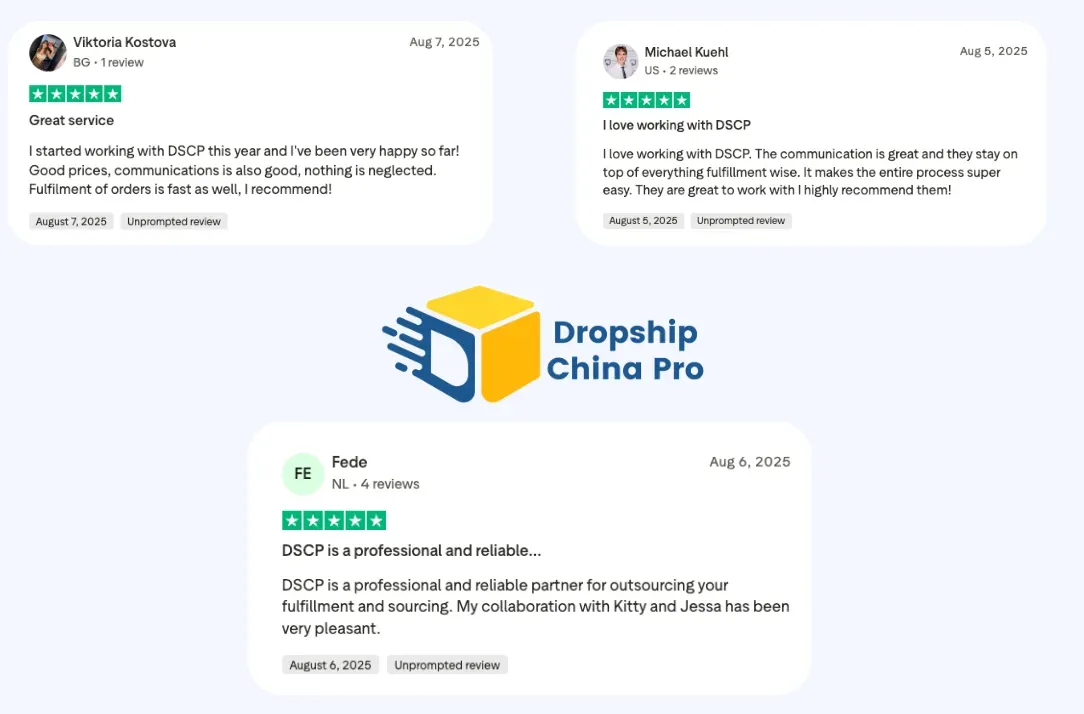
Michael Kuehl from the United States shares his experience working with integrated ecommerce fulfillment: “The communication is great and they stay on top of everything fulfillment-wise. It makes the entire process super easy. They are great to work with, I highly recommend them.” This seamless coordination between ecommerce platforms and fulfillment services creates the operational foundation that allows business owners to focus on growth rather than logistics firefighting.
Scaling Operations with Reliable Partners
Fede from the Netherlands describes the importance of professional fulfillment integration: “DSCP is a professional and reliable partner for outsourcing your fulfillment and sourcing. My collaboration with Kitty and Jessa has been very pleasant.” When your ecommerce platform connects smoothly with dependable fulfillment services, scaling from 50 to 500 orders monthly happens through systematic processes rather than heroic daily efforts.
Speed and Quality as Competitive Advantages
Viktoria Kostova from Bulgaria emphasizes what modern customers expect: “I started working with DSCP this year, and I’ve been very happy so far. Good prices, communication is also good, and nothing is neglected. Fulfillment of orders is fast as well, I recommend!” In 2026’s competitive landscape, fast fulfillment combined with quality products creates the customer experience that drives repeat purchases and positive reviews.
These experiences highlight why platform selection matters beyond features and pricing. The right ecommerce platform integrates seamlessly with fulfillment infrastructure that determines whether you deliver Amazon-level customer experiences or struggle with basic operational reliability.
Technical Skill Requirements
| Ecommerce Platform | Technical Skill Level |
|---|---|
| Shopify | Beginner-friendly |
| WooCommerce | Intermediate |
| BigCommerce | Beginner to Intermediate |
| Wix eCommerce | Beginner-friendly |
| Squarespace | Beginner-friendly |
| Ecwid | Beginner to Intermediate |
| Shift4Shop | Intermediate |
Frequently Asked Questions
Which is the best ecommerce platform for dropshipping?
Shopify consistently ranks as the best overall ecommerce platform for dropshipping due to its combination of ease of use, extensive app ecosystem and proven scalability. For beginners, Shopify’s intuitive interface and comprehensive dropshipping integrations minimize the learning curve. However, “best” depends on your specific needs. WooCommerce offers more customization for WordPress users, BigCommerce provides better scalability for high-volume stores and Shift4Shop delivers strong value for budget-conscious entrepreneurs.
What’s the difference between an ecommerce platform and a marketplace?
An ecommerce platform provides the software infrastructure to build and operate your own branded online store (like Shopify or WooCommerce), where you control branding, customer relationships and business policies. A marketplace is a third-party website where you list products alongside other sellers (like Amazon or eBay), trading brand control for access to existing traffic. Platforms require more marketing effort but offer better profit margins and customer lifetime value, while marketplaces provide immediate traffic but charge higher fees and own customer relationships.
Do I need technical skills to use ecommerce platforms?
Modern ecommerce platforms are designed for non-technical users. Shopify, Wix and Squarespace offer drag-and-drop builders requiring zero coding knowledge. You can launch a professional store simply by selecting a template, adding products and configuring basic settings. WooCommerce and BigCommerce require slightly more technical comfort, but still don’t demand programming skills for basic operations. Advanced customizations may benefit from developer assistance, but the core functionality of all major platforms is accessible to complete beginners.
How much does it cost to start a dropshipping store on an ecommerce platform?
Startup costs vary significantly by platform. Shopify starts at $39/month, WooCommerce’s core software is free but requires hosting ($5-50/month), Wix begins at $27/month, and Shift4Shop is free with their payment processing. Beyond platform fees, budget for a domain name ($10-15/year), premium theme if needed ($0-200), essential apps ($0-100/month), and initial marketing budget ($100-500 to start). Total first-month costs typically range from $100-500, with ongoing monthly costs of $50-200 depending on your platform and tool choices.
Can I integrate multiple sales channels with ecommerce platforms?
Yes, all major ecommerce platforms support multi-channel selling, allowing you to sell on your main store plus marketplaces like Amazon, eBay, Facebook and Instagram simultaneously. Shopify, BigCommerce, and Ecwid offer particularly strong multi-channel capabilities with centralized inventory management that prevents overselling. This integration synchronizes product listings, inventory levels and order processing across all channels from a single dashboard, dramatically simplifying operations compared to managing each platform separately.
What features should I look for in a dropshipping ecommerce platform?
Prioritize platforms offering strong app integrations with dropshipping suppliers and fulfillment services, automated inventory management to prevent overselling, built-in marketing tools for email campaigns and abandoned cart recovery, seamless payment gateway integration, mobile-responsive themes for smartphone shoppers and robust analytics for tracking performance. For dropshipping specifically, automated order routing to fulfillment partners and real-time inventory synchronization across channels are essential features that eliminate manual processing and reduce errors.

Ready to Launch Your Dropshipping Store?
Selecting the right ecommerce platform is just the first step. The real competitive advantage comes from pairing your platform with a reliable fulfillment infrastructure that delivers the fast shipping speeds customers now expect. While your store attracts visitors and converts them into buyers, your fulfillment partner determines whether those customers become disappointed one-time purchasers or loyal repeat buyers.
Learn more about choosing the right ecommerce fulfillment company that integrates seamlessly with your platform and supports your growth from first sale through high-volume operations.
Conclusion
The seven ecommerce platforms explored in this guide each offer distinct advantages for dropshipping businesses in 2026. Shopify leads in overall ease of use and ecosystem strength, WooCommerce provides maximum flexibility for WordPress users, BigCommerce excels at scaling operations, Wix prioritizes design simplicity, Squarespace offers premium aesthetics, Ecwid specializes in multi-channel selling and Shift4Shop delivers feature-rich functionality at minimal cost.
Your optimal choice depends on balancing your technical skills, budget constraints, growth ambitions and specific business requirements. Most importantly, the platform should integrate seamlessly with professional fulfillment services that handle the logistics complexity, allowing you to focus on building your brand and acquiring customers.
The ecommerce platforms market continues to evolve rapidly with new features and capabilities emerging regularly. What remains constant is the fundamental truth that successful dropshipping requires both an excellent customer-facing storefront and reliable backend operations. Choose a platform that supports both dimensions of your business, and you’ll build on a foundation capable of supporting sustainable growth.
The market opportunity in dropshipping remains substantial in 2026, but success increasingly belongs to businesses that operate professionally across all dimensions, from platform selection through fulfillment excellence. Start with the right ecommerce platform, integrate it with dependable fulfillment infrastructure, and focus relentlessly on delivering exceptional customer experiences. This combination creates sustainable competitive advantages that transcend temporary trends or market fluctuations.
References
- Reddit. (2025). What is the best platform for drop shipping in your opinion? Retrieved from reddit.com/r/dropship
- Statista. (2024). Global E-commerce Market Projections 2025. Retrieved from statista.com
- Yahoo Finance. (2026). Dropship China Pro Completes US 3PL Network With Dual-Coast Fulfillment Centers. Retrieved from finance.yahoo.com/news

Hi, I’m Yavuz. I help e-commerce businesses grow through strategic content and SEO. Here, I share insights on fulfillment solutions, 3PL partnerships, and digital marketing strategies based on real data and industry trends.